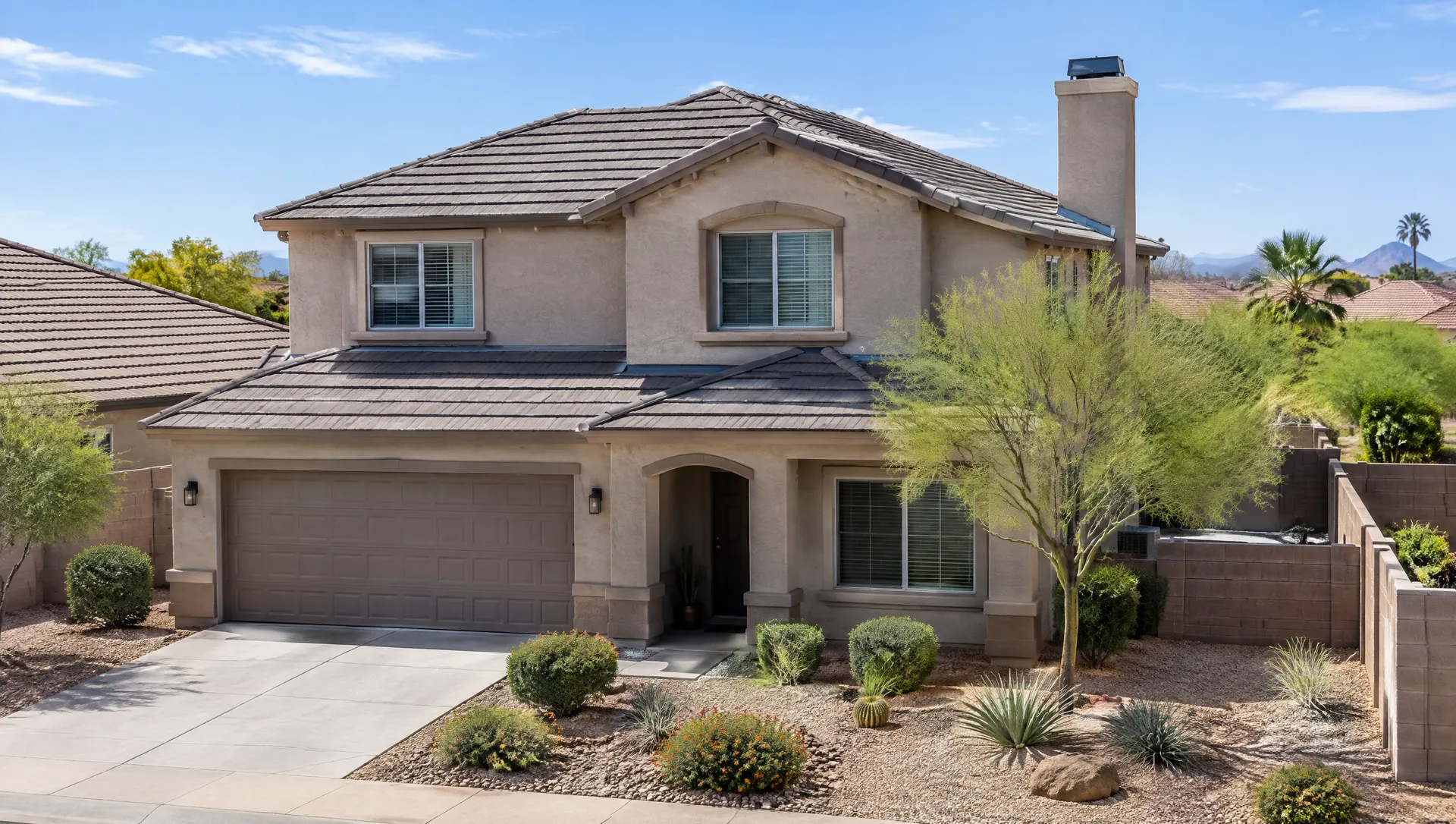
Chandler Roof Replacement
Roof Replacement in Chandler, AZ
Full residential roof replacement, from tear-off and deck repairs to new underlayment, flashing and the finished roof.
Chandler Roof Replacement
Full residential roof replacement, from tear-off and deck repairs to new underlayment, flashing and the finished roof.
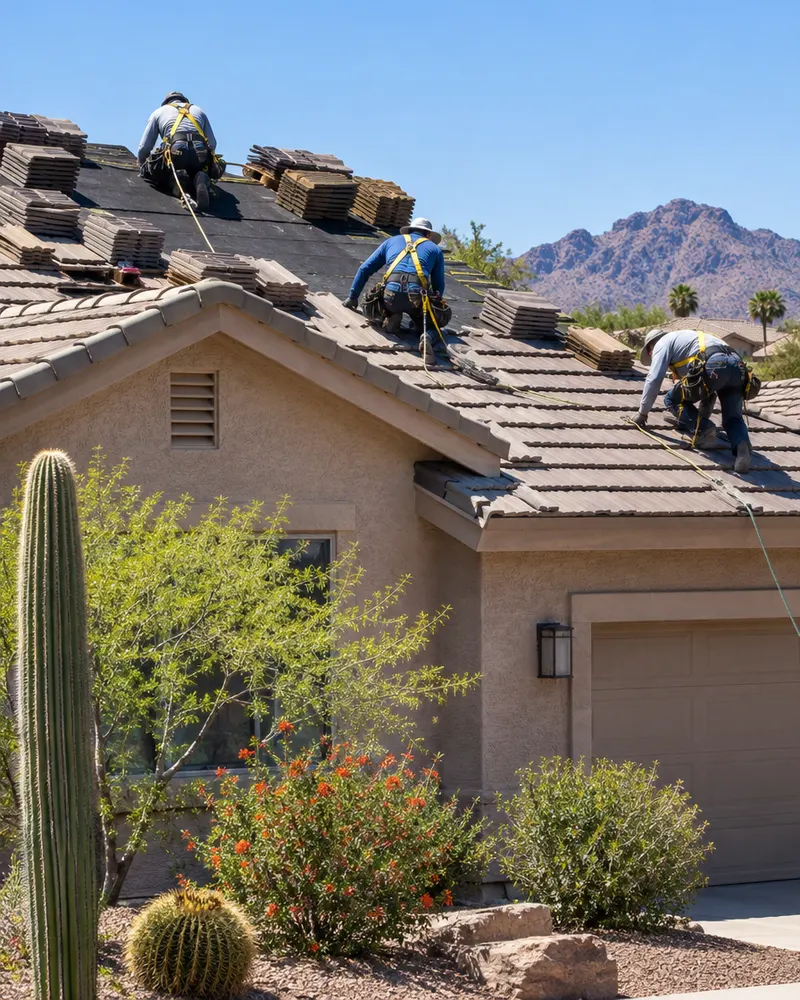
Every roof replacement follows the same order: protect the yard and pool, remove the old roofing, inspect and repair the deck, install new underlayment and flashing, set the ventilation, then install the tile, shingles or foam.
The deck inspection matters. Once the old roof is off, we can see soft or water-damaged sheathing that was hidden before, and we replace it before anything new goes on. You get photos of what we find.
Chandler's Home Owners Building Permit Manual exempts like-for-like roof covering replacement that adds no load to the frame. Switching to a heavier material such as concrete tile needs a permit and an engineering analysis, and so does re-roofing over more than two existing layers.
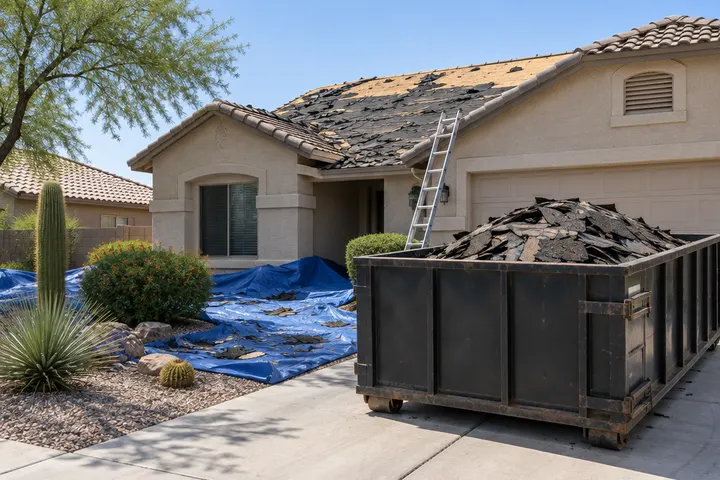
Old roofing removed into a dumpster, with tarps over landscaping and the pool.
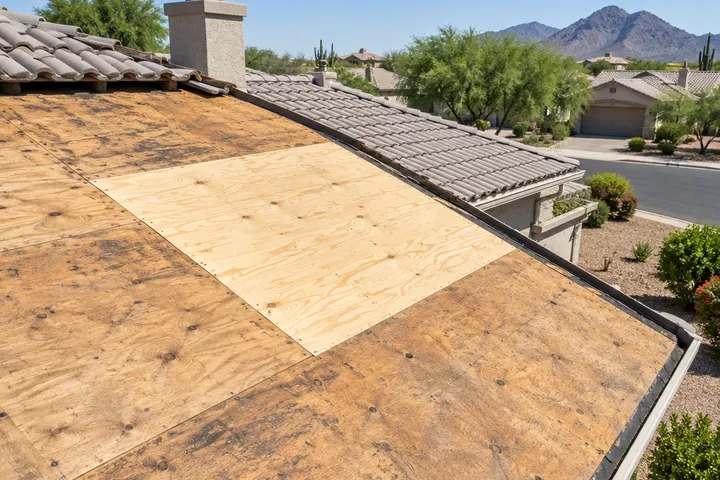
Damaged sheathing cut out and replaced before underlayment goes down.
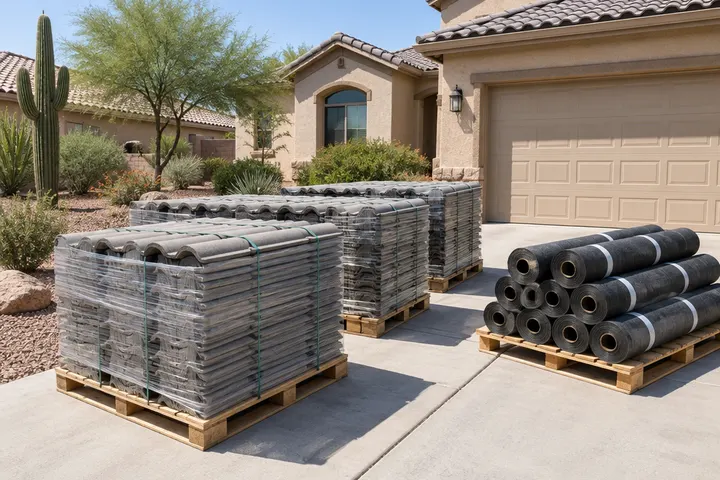
Tile, shingles and underlayment staged and loaded for the job.
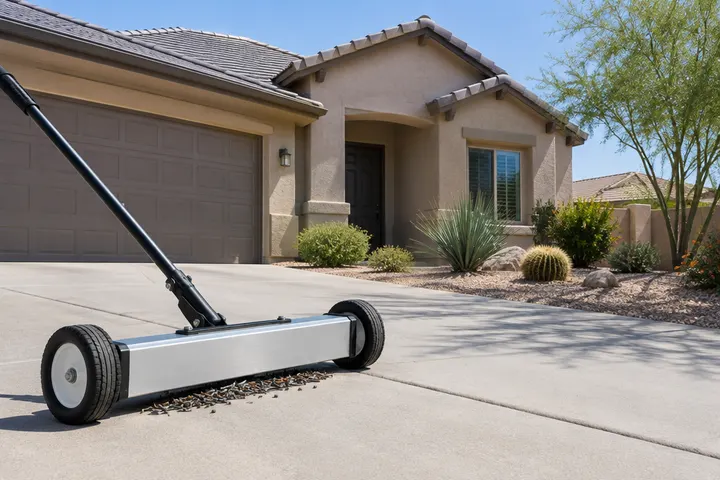
Debris hauled off and the yard and driveway swept for nails.
| Cost factor | What it covers | Why it matters |
|---|---|---|
| Roof size and pitch | Total roof area, steepness and the number of hips, valleys and stories | Steeper, cut-up roofs take more time, safety setup and material waste. |
| Roofing material | Re-laying existing tile, new concrete tile, architectural shingles or spray foam | Reusing sound tile changes the material list far more than any other choice. |
| Underlayment and deck | Underlayment type and layers, battens, and any sheathing replacement | This is the layer that keeps water out, and deck damage only shows once the old roof is off. |
| Details | Flashing, vents, skylights, chimney chases and flat-to-sloped transitions | Each penetration is a place where monsoon rain can get in, so each one gets new flashing. |
Your written estimate lists each of these separately, so you can compare material options without cutting the underlayment and flashing work that keeps the roof dry.
| Option | What happens | Best when |
|---|---|---|
| Tile lift-and-relay | Tiles removed and stacked, new underlayment and battens, tiles re-laid | Tiles are sound but the underlayment is worn |
| New tile roof | Everything removed, new underlayment and new tile | Tiles are brittle, discontinued or you want a new profile |
| Shingle tear-off | Old shingles removed, deck repaired, new shingles | Shingles are curling, cracking or losing granules |
| Foam re-roof | Old foam removed or prepared, new foam and coating | The foam is exposed, blistered or holding water |
It depends on the roof's size and pitch, whether your tile can be re-laid, the underlayment you choose and any deck damage found during tear-off. We give a written estimate after inspecting the roof, with each part of the job listed.
It depends on the material and the underlayment. Concrete tile itself is long-lived, but the underlayment under it usually sets the timeline for the next replacement, which is why we focus on that layer.
No. It is noisy during tear-off, but most homeowners stay home. We tell you which days will be loudest.
We watch the forecast closely during monsoon season and only open as much roof as we can dry in the same day.
Tell us about your roof and any leaks you have seen. We will inspect it and give you a written estimate.
Free estimate, no obligation